

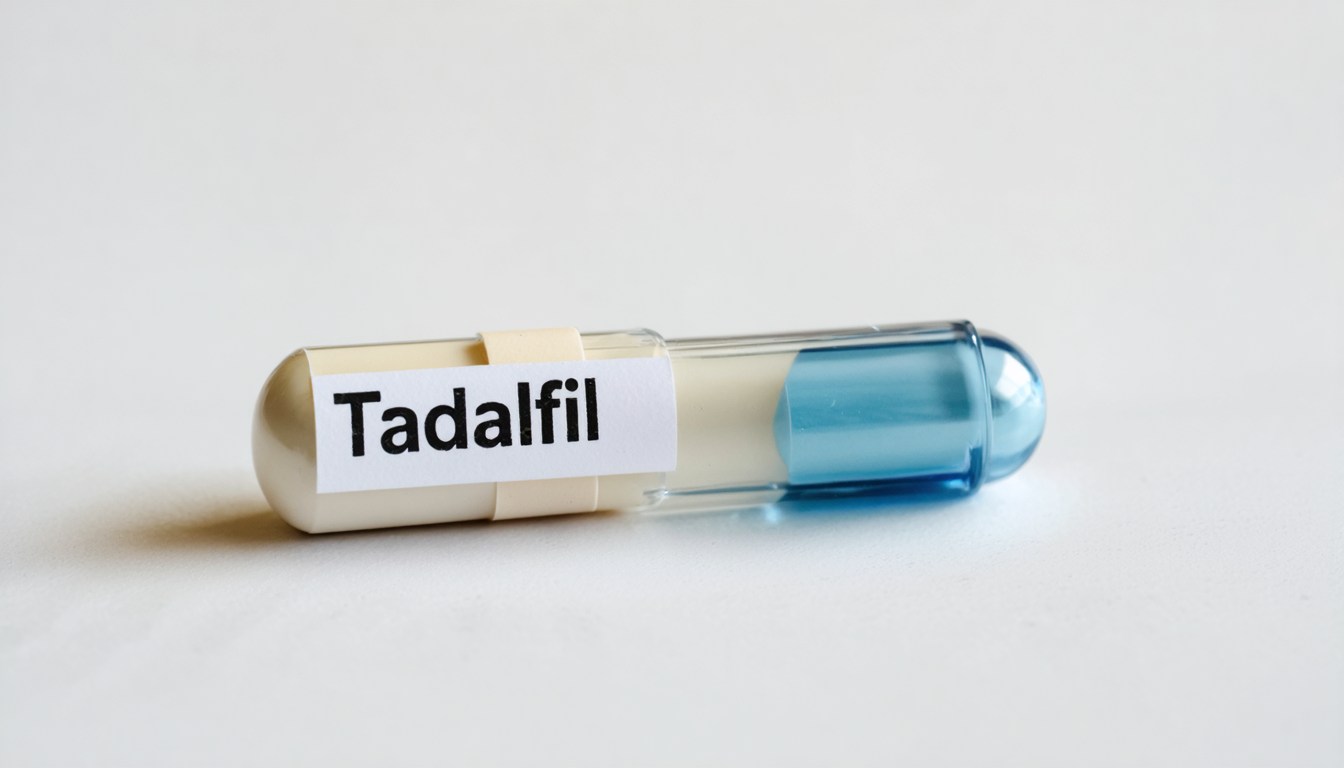
“Tadalafil”: what it is and what your next step should be
Disclaimer: This article is for informational purposes only and does not replace medical advice, diagnosis, or treatment. Tadalafil (brand name Cialis® and generics) is a prescription medication. Always consult a qualified healthcare professional before starting or changing any treatment.
If you are searching for tadalafil for erectile dysfunction, Cialis for ED, or tadalafil for enlarged prostate (BPH), you are likely trying to solve a specific problem. Below is a practical, step‑by‑step guide—from symptom to next action.
3 typical scenarios
Scenario 1: Difficulty getting or maintaining an erection
What is experienced: You notice weaker erections, difficulty maintaining firmness during intercourse, or reduced sexual confidence. This may be occasional or persistent.
What this might mean: It could be erectile dysfunction (ED), which may be linked to stress, anxiety, relationship factors, diabetes, high blood pressure, cardiovascular disease, hormonal imbalance, or certain medications. Occasional issues are common; persistent symptoms deserve evaluation.
What a doctor usually does:
- Asks about onset, frequency, and severity of symptoms.
- Reviews medical history (heart disease, diabetes, depression).
- Checks current medications (e.g., nitrates, antihypertensives).
- May order blood tests (glucose, lipids, testosterone).
- Assesses cardiovascular risk before prescribing a PDE5 inhibitor such as tadalafil.
You can read more about erectile dysfunction causes and evaluation to better prepare for your appointment.
Scenario 2: Urinary symptoms from an enlarged prostate (BPH)
What is experienced: Frequent urination (especially at night), weak urine stream, difficulty starting urination, or a feeling of incomplete bladder emptying.
What this might mean: These symptoms may be due to benign prostatic hyperplasia (BPH). Tadalafil is approved in many countries for lower urinary tract symptoms associated with BPH.
What a doctor usually does:
- Uses symptom questionnaires (e.g., IPSS score).
- Performs a physical exam, possibly including digital rectal exam.
- Orders urine tests and sometimes PSA blood test.
- Discusses treatment options: lifestyle changes, alpha-blockers, 5‑alpha reductase inhibitors, or tadalafil.
See our overview of benign prostatic hyperplasia (BPH) treatment options for a broader context.
Scenario 3: You are considering tadalafil but have heart disease or take other medications
What is experienced: You want help with ED, but you also have angina, use nitrate medication, or take multiple prescriptions.
What this might mean: Tadalafil (a PDE5 inhibitor) can significantly lower blood pressure when combined with nitrates (e.g., nitroglycerin) or certain other drugs. In some cases, it is contraindicated.
What a doctor usually does:
- Reviews all medications, including over‑the‑counter and supplements.
- Evaluates cardiovascular stability and exercise tolerance.
- Assesses blood pressure control.
- Determines whether tadalafil is safe, needs adjustment, or should be avoided.
If you have complex health conditions, review medication safety and drug interactions before discussing treatment.
Decision tree: what to do next
- If erection problems are occasional and linked to stress → then consider lifestyle adjustments (sleep, stress reduction, alcohol moderation) and monitor for a few weeks.
- If erection difficulties persist for 3 months or more → then schedule a primary care or urology appointment.
- If you have ED plus diabetes, hypertension, or chest pain → then seek medical evaluation before any ED medication.
- If you have urinary symptoms (weak stream, frequent urination) → then consult a doctor to assess for BPH.
- If you take nitrates or have unstable heart disease → then do not use tadalafil unless specifically cleared by your physician.
- If you experience side effects (headache, flushing, back pain) → then discuss tolerance and alternatives with your doctor.
When to seek help urgently (red flags)
- Chest pain during sexual activity: Could indicate cardiovascular instability.
- Priapism (erection lasting more than 4 hours): Medical emergency; risk of permanent damage.
- Sudden vision loss or hearing loss: Rare but serious adverse events requiring immediate evaluation.
- Severe dizziness or fainting: May indicate significant blood pressure drop.
Approaches to treatment/management (overview)
Tadalafil belongs to the class of phosphodiesterase type 5 (PDE5) inhibitors. It works by increasing blood flow to specific tissues in response to sexual stimulation. It does not increase sexual desire directly.
Common management approaches include:
- PDE5 inhibitors (e.g., tadalafil): Used for ED and sometimes BPH, as prescribed by a doctor.
- Lifestyle modification: Weight loss, physical activity, smoking cessation, and limiting alcohol.
- Psychological support: For performance anxiety, depression, or relationship stress.
- Hormonal therapy: In selected cases of confirmed low testosterone.
- Alternative ED treatments: Vacuum devices, injections, or surgical options in specific cases.
Tadalafil is known for its longer duration of action compared to some alternatives, which is why it is sometimes referred to as the “weekend pill.” However, the exact dosing schedule and suitability depend on your health profile and must be determined by a physician.
Prevention: reducing risk of ED and urinary symptoms
Many cases of erectile dysfunction are linked to vascular health. Protecting your heart often protects sexual function.
- Maintain healthy blood pressure and cholesterol levels.
- Control blood sugar if you have diabetes.
- Exercise regularly (aerobic activity improves endothelial function).
- Maintain a healthy weight.
- Avoid tobacco.
- Manage stress and sleep quality.
Explore our guide on cardiovascular health and sexual function to understand the connection.
| Method | Who it suits | Limitations / Risks |
|---|---|---|
| Tadalafil (as prescribed) | Men with diagnosed ED or BPH | Headache, flushing, back pain; contraindicated with nitrates |
| Lifestyle changes | Most adults, especially with vascular risk factors | Requires consistency; effects may take time |
| Psychological counseling | Men with anxiety-related ED | May not address physical causes alone |
| Hormonal therapy | Men with confirmed low testosterone | Requires monitoring; not suitable for all |
| Other ED treatments (devices/injections) | Those who do not respond to oral meds | Invasive or less convenient |
Questions to ask your doctor
- Is tadalafil appropriate for my condition?
- Do my heart health and blood pressure allow safe use?
- Are there interactions with my current medications?
- What side effects should I watch for?
- How does tadalafil compare to other PDE5 inhibitors?
- Could my symptoms indicate an underlying condition?
- Should I undergo blood tests before treatment?
- Is daily or on‑demand use more appropriate in my case?
- How long should I try treatment before reassessment?
- What lifestyle changes would improve outcomes?
- What should I do if the medication does not work?
Sources (authoritative)
- U.S. Food and Drug Administration (FDA). Cialis (tadalafil) prescribing information.
- European Medicines Agency (EMA). Tadalafil summary of product characteristics.
- American Urological Association (AUA). Erectile Dysfunction Guideline.
- American Urological Association (AUA). Management of Benign Prostatic Hyperplasia.
- National Institute for Health and Care Excellence (NICE). Erectile dysfunction and lower urinary tract symptoms guidance.
- Mayo Clinic. Tadalafil (oral route) drug monograph.
Bottom line: Tadalafil can be an effective treatment for erectile dysfunction and urinary symptoms related to BPH—but only when used appropriately and safely. If you recognize yourself in one of the scenarios above, your next best step is a structured conversation with your healthcare provider.